Execution Risk in African Energy Projects
In many African energy markets, the primary constraint is not the availability of projects but the ability to execute them in ways that meet institutional capital requirements.
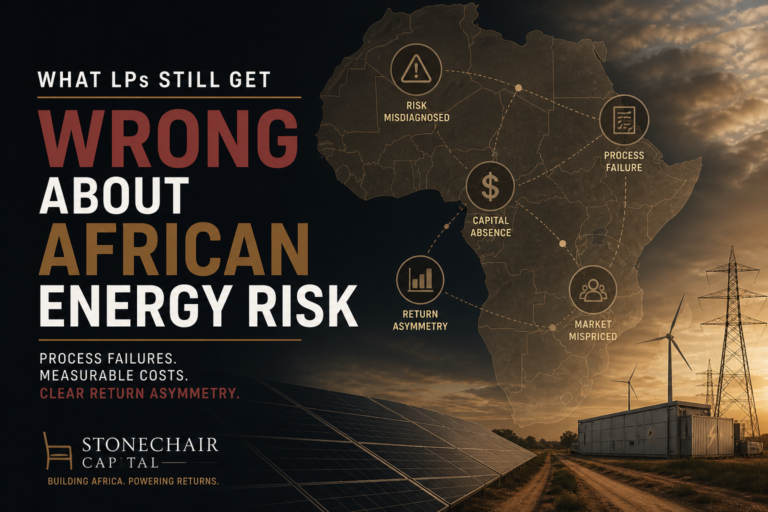
A significant number of projects reach a stage where they are technically viable, but not yet investable. This gap is often driven by a combination of structuring issues, misaligned incentives, and insufficient attention to execution risk.
From an investment perspective, the key challenges are rarely geological or technological. They are typically commercial, contractual, and organizational. Power purchase agreements, counterparty risk, capital structure, and governance all play a critical role in determining whether a project can attract and sustain long-term capital.
Over multiple capital cycles, a consistent pattern emerges: projects that succeed are those where structure and execution are addressed early, not after capital is introduced. When these elements are misaligned, capital tends to be either mispriced or unavailable.
For investors and developers alike, the focus should be on bridging the gap between viability and investability. This requires disciplined structuring, realistic assumptions, and alignment between stakeholders.
In this context, the opportunity set remains significant. However, realizing that opportunity depends less on identifying projects and more on executing them within a framework that institutional capital can support.