
The Investability Gap
Africa’s financing gap is real. For viable energy and infrastructure assets, an additional constraint is the shortage of instruments that meet investors’ requirements for risk, tenor, currency, governance and liquidity.
Rwanda has moved public EV charging and battery swapping into a binding licensing regime. The commercial impact falls on interoperability, service levels, capital expenditure, tariff eligibility and licence tenor.
Kenya’s reformed public markets are opening a new financing lane for African energy. The Nairobi Securities Exchange now combines regulatory openness, energy-sector listing momentum, green-bond infrastructure, and domestic institutional capital in a way that makes it a compelling equity venue for East African energy projects.
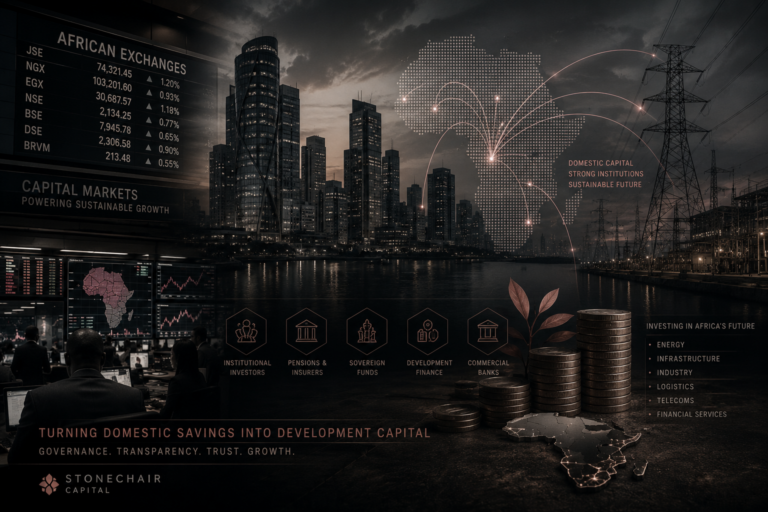
Africa does not only need more investors. It needs more investable companies. Public markets can help convert domestic savings into productive investment by strengthening governance, reporting discipline, liquidity, and investor confidence.
The Strait of Hormuz closure has turned imported fuel dependence into a live African macro risk. For investors, the opportunity is to finance the systems that reduce diesel exposure, stabilize power costs, and make African economies less vulnerable to external energy shocks.